
Woodland School News
Spring 2 Term
How nice it has been to see the weather change this half term. This has meant we have been able to spend a good deal more time climbing trees, sharing time around fires, cooking together and observing all the exciting changes spring has brought with it.
The children have continued to be consistently resilient and engaged, facing challenge and solving problems collectively and as individuals. All groups have continued to extend their use of tools, but some children are keener than others to learn new skills.
I have set each child the challenge to try something new when we return after Easter, whether that be playing with someone they haven’t played with before, climbing a tree for the first time, or experimenting with a tool or skill they haven’t yet tried.
Use of tools and mastering key safety instructions, adapting the skills they have been taught, are key features of Risky Play which is identified as a crucial part of the early development of human brains. You can read more about this if you would like to in the section below.
Targeted learning for Year 5 has focused on friction and forces which oppose motion. We have been helping a poor unfortunate young man called Rodney, who found himself on a deserted, desert island with nothing but a palm tree for company and a few other objects and materials washed up from his boat. By experimenting with which of these materials created or reduced friction, the children have found ways Rodney can use the small pool of resources he has to hand to climb the palm tree to collect coconuts and palm leaves for food and shelter. We have also investigated ways Rodney could keep his coconuts and palm leaves safe from any island invaders as well.
I have been so impressed by how inquisitive and enquiring the children have been. We have also been working on developing the skills and behaviours we need to make nurturing choices towards each other during free-play.
Targeted learning for Year 4 this half term has focussed on teamwork and togetherness. Children have worked together and independently to learn more about themselves and their peers, building resilience, inclusion, independence and empathy through play. We have seen some children move through directed, formulaic and repetitive tasks into deep play and beyond, challenging themselves, taking risks and celebrating their collective success in doing so. We also ended our sessions together this half-term with an Easter egg hunt through the gated woodland. This is an area Year 4 haven’t explored much so far, so I hope the egg hunt has served as a good introduction to encourage them into this shady spot as the weather turns warmer and the sun becomes brighter. Spending time helping them to learn and grow has been a joyful and rewarding experience for me, so I hope it has been for them too!
Targeted learning for Year 1 has been a repeat for 1HK of what was offered last term for 1H. We have focussed on animals, their properties and their habitats. We have learnt about what all living things, including animals, need to survive and to thrive. We have learnt that some animals live in family groups and some do not and have started to talk about the classification types; mammals, amphibians, reptiles, invertebrates, fish and birds. Some of the children have worked very hard to look after some of our toy animals, cleaning them, finding them food and water and building them shelters in which they can stay warm and rest. We have watched with fascination and excitement as the world has begun to wake up around us after its long winter’s sleep. In the woods, we have found evidence of rabbits, squirrels, foxes and birds sharing our site. We have been learning why we need to keep our woodland tidy and free from litter and how this also impacts animal life.
I wonder why…
Risky Play is essential for my child’s development?
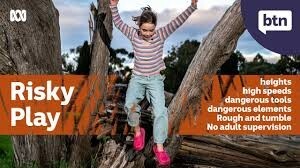
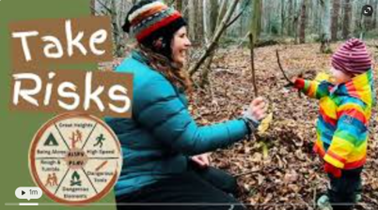
Risky play is any thrilling, adventurous activity involving a risk of physical or social injury. Risk taking and risk management is essential for developing resilience, confidence, and risk-assessment skills in children. It includes climbing, high speeds, using tools, and rough-and-tumble play, allowing children to test boundaries, overcome fears, build resilience and learn to manage potential danger. A lack of opportunities to explore appropriate risk is linked both the risk seeking and risk adverse behaviour in teenagers and adults, both of which can limit an individual’s ability to embrace opportunities or keep themselves safe.
Key Benefits of Risk-Taking in Play
Physical Development: Risky play enhances strength, coordination, balance, and agility through climbing, running, and jumping.
Mental & Emotional Growth: Building resilience, self-confidence, and independence by managing fear and overcoming challenges.
Risk Management: Teaches children to evaluate hazards, understand their own limitations, and make safer choices.
Problem-Solving: Encourages children to self-find solutions to obstacles, such as determining if they can safely cross a log or jump from a height.
6 Main Types of Risky Play
Great Heights: Climbing trees, structures, or jumping from high places.
High Speed: Running fast, cycling, or using wheels to create thrilling sensations.
Dangerous Tools: Using items like hammers, knives, or saws, which helps children learn responsibility.
Dangerous Elements: Playing near fire, deep water, or in, for example, a forest school setting.
Rough-and-Tumble: Wrestling and play-fighting, which helps children distinguish between play and actual conflict.
Disappearing from adult view: Hiding or wandering off, which provides independence while still in a safe, monitored environment.
If you would like to learn more, or prefer to learn in a more visual way, please do explore the video links below which explain Risk Taking during play further.
https://www.youtube.com/watch?v=C_aqapgaodM&t=121s
https://www.youtube.com/watch?v=cO4qU2N3W48&t=43s
Spring 1 Term
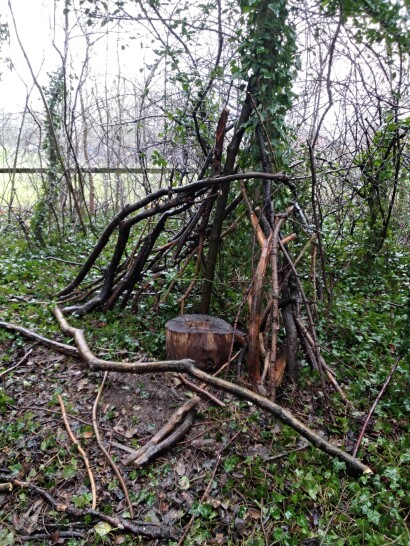 What a wonderful half term we have had so far! The children have been consistently resilient and engaged, despite the sometimes really quite inclement weather. All groups have enjoyed extending their use of tools, mastering key safety instructions and adapting the skills they have been taught, incorporating this into their mastery play. We have also learnt and adapted shelter building and rope work skills. A favourite new play and learning opportunity for this year has been fluid dynamics as we have experimented with moving water around from place to place using only drainpipes, joining pieces and gravity.
Targeted learning for Year 5 this half term has focussed on teamwork and togetherness. Children have worked together and independently to learn more about themselves and their peers, building resilience, inclusion, independence and empathy through play. We have seen some children move through directed, formulaic and repetitive tasks into deep play and beyond, challenging themselves and celebrating their collective success in doing so. Spending time helping them to learn and grow has been a joyful and rewarding experience for me, so I hope it has been for them too!
Targeted learning for Year 4 has been all about plant reproduction. By experimenting with bubbles, water, wind, transportation play and animal play, we have learnt how and why seeds spread. Some of the children even found a squirrel’s cache of nuts and seeds buried along one of the explore to learn paths which runs through our woodland. Through our creation of large, natural art installations, we have learnt about the internal structure of plants and through observations of the ecosystem around us, we have learnt how and why plants are essential to all life on Earth.
I have been so impressed by how inquisitive and enquiring the children have been. I have also been made so proud by their nurturing choices during free-play, both in their attitudes towards each other and also in the imaginary games they have played with our toy animals in the woods.
Targeted learning for Year 1 has focussed on animals, their properties and their habitats. We have learnt about what all living things, including animals, need to survive and to thrive. We have learnt that some animals live in family groups and some do not, that some animals have backbones and some do not and that some animals wear their skeletons on the outside of their bodies. We have also started to talk about the classification types; mammals, amphibians, reptiles, invertebrates, fish and birds. Some of the children have worked very hard to look after some of our toy animals, cleaning them, finding them food and water and building them shelters in which they can stay warm and rest. We have watched with fascination and excitement as the world has begun to wake up around us after its long winter’s sleep. In the woods, we have found evidence of rabbits, squirrels, foxes and birds sharing our site. We have been learning why we need to keep our woodland tidy and free from litter and how this also impacts animal life.
Wish List
Please find below a list of items we would appreciate as donations in Woodland School.
- Logs and stumps
- Wooden pallets
- Hammocks
- Junior hacksaws
- Potato peelers
- Small hammers
- Litter pickers
- A saw bench or cutting table
- Wool and thread
- Rubber mallets
- Play tunnels
- Pop up camping or play tents
- Camping chairs
- Hot chocolate powder
- Biscuits (for dipping in hot chocolate)
- Any contacts anybody may have where we could source for free or get a grant for a permanent shelter of some kind.
I wonder what…
I wonder what a Play Schema is?
Play schemas are patterns of repeated behaviour, exhibited by children during play. These help them to explore and understand the world around them.
Some key examples of play schemas are:
Orientation - The urge to hang upside down, get the view from under the table or on top of the dresser and other actions that are part of the Orientation schema. In order to 'know' what it is like to hang upside down or see things from a different point of view you must take yourself into those positions.
Positioning - Do you find yourself Positioning things neatly into alignment on your desk, ordering the books on the self, getting creative when you plate the dinner or even just tidying-up.
Connection - Joining train tracks, clicking together pieces of Lego, running a string from one thing to another... the urge of Connection. This can mean connecting and disconnecting too, building followed by destruction.
Trajectory - The urge to throw, drop and other actions that are all part of the Trajectory schema. Some other Trajectory actions are things like climbing up and jumping off (Trajectory of ones own body), putting your hand under running water (interacting with things that are already moving) and the classic, throwing and dropping (making it happen).
Enclosure/Container - The urge to fill up cups with water, climb into cardboard boxes or kitchen draws, build fences for the animals or to put all the animals inside the circular train track.
Transporting - Transporting can be the urge to carry many things on your hands at one time, in jars, in buckets and baskets, or even better containers with wheels.
Enveloping - To have a sheet over your head, wrapping things in fabrics or with tape and paper - all actions seen in the Enveloping schema. An extension of this is peek-a-boo.
Rotation - Anything that goes around anything that is circular - wheels, turning lids, watching the washing machine on spin cycle, drawing circles, spinning around on the spot, being swung around.
Transformation - The urge to Transform can come in many forms; holding all your food in your mouth for a long time to see what it turns into, mixing your juice with your fish pie, water with dirt, or helping Granny with mixing the bread dough
(Muddy Puddle Outdoor Learning, 2020)
During Woodland school sessions, we adults have been observing schemas in children’s play and have used this to help inform our planning and resourcing for each new session.
I wonder what Play Types are?
Play Types are a framework of 16 distinct, observable behaviours, first defined by Play Work Researcher Bob Hughes. They describe how children play both physically and socially, helping adults understand and facilitate developmental needs.
Key Types of Play (Bob Hughes' Taxonomy)
- Symbolic Play: Using objects to represent other things.
- Rough and Tumble Play: Physical play involving wrestling or chasing.
- Socio-Dramatic Play: Acting out scenes from everyday life.
- Social Play: Any play that involves interacting with others.
- Creative Play: Creating something new, such as drawing or crafting.
- Communication Play: Using words, gestures, and sounds.
- Dramatic Play: Playing, but not in a make-believe way (e.g., trying on clothes).
- Locomotor Play: Movement for the sake of movement, such as running or jumping.
- Deep Play: Activities involving a high level of risk or intensity, allowing children to overcome fears.
- Exploratory Play: Investigating new objects or environments.
- Fantasy Play: Acting out scenes that are not part of real life.
- Imaginative Play: Creating imaginary worlds and rules.
- Mastery Play: Controlling the environment, such as building with blocks.
- Object Play: Playing with items, such as toys or natural materials.
- Role Play: Adopting a persona.
- Recapitulative Play: Play that allows children to explore their ancestry or ancient behaviours.
Our OPAL programme uses a framework of Play Types too, also based on the work of Bob Hughes. In OPAL, some of the play types have been combined together to make 10 rather than 16. In Woodland school, we use play work to help extend children’s creative and learning experiences.
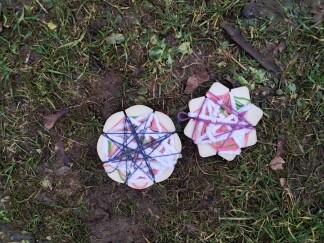
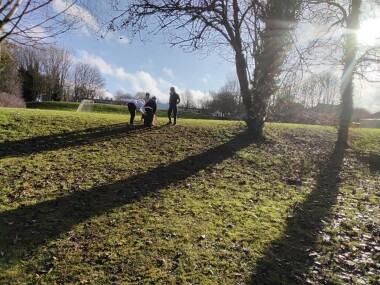
Here are some photographs of some of the fabulous things we have found, learnt and created So far this term. I wonder if you can spot any Schemas or Play Types at work?