
Year 5 News
Spring 2 Term
The children have returned after half term feeling refreshed and ready to learn, settling back into school routines smoothly. They have approached their work with enthusiasm and a positive mindset, and it has been fantastic to see their confidence continuing to grow, especially in their willingness to share ideas and contribute during class discussions.
Maths
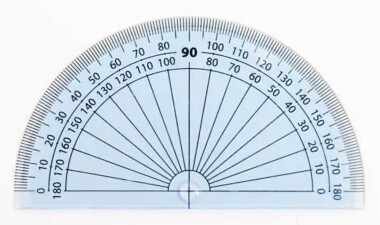
In Maths, we have been focusing on Geometry, with a particular emphasis on estimating and calculating angles. The children have been developing both their conceptual understanding and practical skills in this important area of mathematics.
How You Can Help at Home
You can support your child by:
• Spotting and discussing angles around the home or outside
• Asking them to estimate angles in books, signs, or furniture
• Practising measuring angles with a protractor
• Asking them to explain how they know their answer is correct
English
In English this week, the children have been creating their biography about Nelson Mandela.
Through this project, pupils have not only learned about the life and legacy of Nelson Mandela, but they have also developed a wide range of important literacy skills.
What We Have Been Learning
- Understanding Biography Writing
- Research Skills
- Planning and Organising Writing
- Sentence Structure and Grammar
- Vocabulary Development
- Editing and Improving Work
- Presentation Skills
Learning about Nelson Mandela allowed pupils to:
- Understand the importance of perseverance and resilience
- Discuss fairness, equality, and justice
- Reflect on how individuals can create positive change
- Develop empathy and global awareness
This project has been a wonderful opportunity to combine literacy skills with meaningful history learning. We are incredibly proud of the effort, thoughtfulness, and growth the pupils have shown throughout this unit.
In Guided Reading, the pupils have explored the text ‘Journey to Jo’Burg.’ We have focused on retrieving key information from the text, making inferences using evidence, predicting what might happen next, exploring characters’ thoughts, feelings and motivations, identifying themes such as courage, family, hope and resilience & discussing the author’s purpose and message.
Science
In Science, we have continued our exciting Chemistry unit focusing on substances. The children have explored the key question:
“How are substances made?”
As part of this topic, pupils investigated how substances can change when they are mixed, heated, or cooled. They observed how materials behave and began to understand that some changes are reversible while others are not.
The children took part in practical, hands-on investigations that encouraged curiosity and careful observation. They were supported to ask scientific questions, make predictions, and explain their findings using appropriate scientific vocabulary.
History
This week in History, we explored an exciting question:
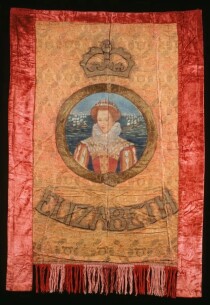
What can inventories tell us about life in Tudor times?
As part of our Tudor topic, pupils became history detectives. Instead of reading from a textbook alone, they examined real historical evidence to find out how people lived during the time of Henry VIII and Elizabeth I.
2026 Year of Reading
Spring 1 Term
The children have settled quickly into routines and approached their learning with enthusiasm and positivity. It has been wonderful to see their confidence and eagerness to share ideas in class.
Maths
In Maths, we have been focusing on time. The children have been revisiting key facts, including:
• Reading analogue and digital clocks
• Understanding a.m. and p.m.
• Knowing how many seconds in a minute, minutes in an hour, and hours in a day
• Using timetables to calculate durations and solve time-based problems
This strong foundation has helped the children develop accuracy and confidence when working with time, particularly when reasoning and explaining their thinking.
Building on these skills, we are now moving on to mass and conversion. Children will be:
• Comparing and ordering masses
• Using grams and kilograms correctly
• Converting between different units of mass
• Applying their knowledge to real-life problem-solving situations
Throughout these lessons, there is a strong emphasis on applying prior learning, choosing appropriate methods, and explaining answers clearly. These skills are essential as we continue to develop fluency, reasoning, and problem-solving across all areas of maths.
English
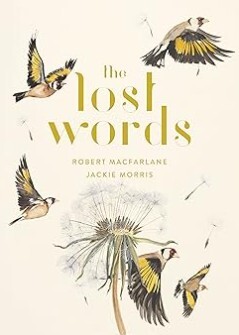
In English, we have been focusing on poetry, using the beautifully illustrated book The Lost Words by Robert Macfarlane and Jackie Morris as our inspiration.
This book was written in response to nature-related words being removed from a children’s dictionary, and its purpose is to celebrate, protect, and reconnect children with the natural world through language. Each poem brings these lost words back to life and encouraging readers to notice, value, and care for nature around them.
The children have explored how poets use:
• Rich and precise vocabulary
• Figurative language such as similes and metaphors
• Personification to bring nature to life
• Structure and rhythm to create mood and meaning
Using these skills, the children have written their own poem for their Apprentice Write, carefully choosing language to create vivid images and strong emotional impact. They have shown great creativity, thoughtfulness, and pride in their writing, applying editing and redrafting skills to improve their work. This unit has not only supported the development of writing skills but has also encouraged the children to observe the world more closely and express their ideas in a thoughtful and imaginative way.
Science
In Science, we have begun an exciting new unit in Chemistry, with a focus on substances. The children are exploring the big question:
“How are substances made?”
Throughout this unit, the children will develop their understanding of what substances are and how different materials are formed and changed. They will be learning to:
• Identify and describe different types of substances
• Understand that substances are made from particles
• Explore the properties of materials and how these affect their use
• Investigate how substances can be changed through mixing, heating, and cooling
The children will take part in hands-on investigations, observations, and discussions, encouraging them to ask questions, make predictions, and explain what they notice using scientific vocabulary. There will also be a strong focus on working scientifically by planning simple investigations, recording results, and drawing conclusions.
As the unit progresses, the children will build their knowledge step by step, helping them to understand how substances are created, how they behave, and how they are used in everyday life.
We are looking forward to seeing the children’s curiosity and enthusiasm grow as they explore this fascinating area of science.
R.E.
In Religious Education, the children have begun an exciting new unit on Humanism. This unit helps pupils explore a non-religious worldview and encourages thoughtful discussion about beliefs, values, and what guides people’s choices in life.
During this unit, the children will learn that Humanism is a way of thinking that focuses on human beings, their experiences, and their ability to make moral decisions without belief in a god or gods. We will discuss how Humanists believe people can live good, meaningful lives by being kind, fair, and responsible, and by using reason, evidence, and empathy to guide their actions.
The children will explore:
• What Humanists believe about life, happiness, and responsibility
• How Humanist values such as kindness, respect, honesty, and equality influence everyday choices
• Similarities and differences between Humanism and religious worldviews previously studied
• How people with different beliefs can still share common values
There will be plenty of opportunities for discussion, reflection, and respectful debate, helping children to develop their listening skills and learn how to express their own ideas thoughtfully. This unit also supports our wider aim of promoting understanding, tolerance, and respect for different beliefs and ways of life.
Message from Year 5 Team:
Your continued support and involvement in your child’s learning play an essential role in their development and success. When families and teachers work together, we create a strong foundation that supports not only academic progress but also builds confidence, curiosity, and a positive attitude towards learning.
The encouragement you provide at home—through conversations about their day, sharing books together, or celebrating achievements—has a significant impact on your child’s motivation and progress. These small but meaningful moments help reinforce learning and boost self-belief.
By maintaining this strong partnership, we can support every child in reaching their full potential, tackling challenges with confidence, and embracing new opportunities with enthusiasm. Your engagement helps make their learning experience purposeful, enjoyable, and memorable.
We are truly grateful for your commitment and support—it has a lasting impact on your child’s growth, resilience, and future success.
Thank you for being such an important part of their journey.
The Year 5 Team